Cáncer gástrico difuso: otra mirada
DOI:
https://doi.org/10.22516/25007440.1403Palavras-chave:
Cáncer gástrico, adenocarcinoma, patología, carcinogénesis, revisión, condiciones precancerosasResumo
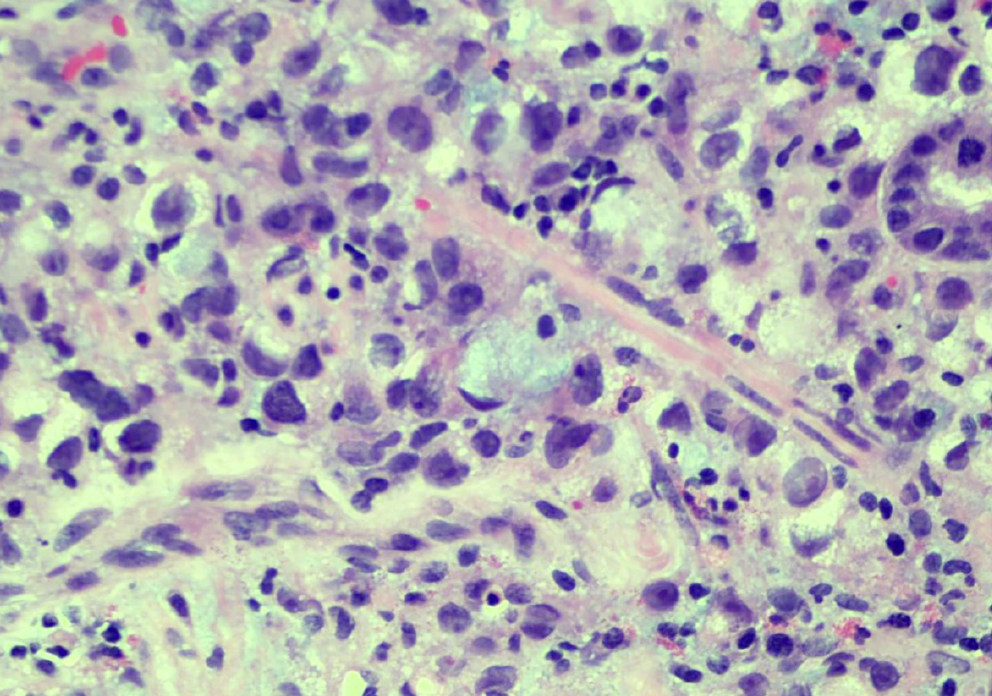
Introducción: el cáncer gástrico de tipo difuso se ha asimilado en su manejo y tratamiento al cáncer gástrico de tipo intestinal. La literatura brinda argumentos para pensar que el cáncer gástrico de tipo difuso difiere del intestinal en muchos aspectos. Mientras que la incidencia del intestinal ha disminuido gradualmente, la del tipo difuso se mantiene estable o incluso ha aumentado. Este artículo revisa de manera crítica algunos aspectos del cáncer gástrico de tipo difuso de acuerdo con su epidemiología, localización, etiología, su relación con el Helicobacter pylori y el microbioma gástrico, así como explora algunas consideraciones acerca de su carcinogénesis y tratamiento.
Resultados: la carcinogénesis del cáncer gástrico de tipo intestinal tiene más relación con factores medioambientales, y el difuso, con mutaciones en el gen CDH1. Clínicamente, el difuso se asocia con mal pronóstico, afecta a las personas jóvenes, especialmente mujeres, y las terapias utilizadas proporcionan menos beneficios o generan resistencia.
Conclusiones: el cáncer gástrico de tipo difuso muestra diferencias epidemiológicas, clínicas, patológicas, moleculares, genéticas y de localización con respecto al tipo intestinal. Es importante avanzar hacia una mejor comprensión de su fisiopatología, así como de los subgrupos patológicos y moleculares, que facilite la selección de pacientes en relación con las diferentes estrategias terapéuticas, su combinación y secuencia.
Downloads
Referências
Bray F, Laversanne M, Sung H, Ferlay J, Siegel RL, Soerjomataram I, et al. Global cancer statistics 2022: GLOBOCAN estimates of incidence and mortality worldwide for 36 cancers in 185 countries. CA Cancer J Clin. 2024;74(3):229-63. https://doi.org/10.3322/caac.21834
Marghalani A, Bin Salman T, Faqeeh F, Asiri MK, Kabel AM. Gastric carcinoma: insights into risk factors, methods of diagnosis, possible lines of management and the role of primary care. J Family Med Prim Care 2020;9(6):2659-63. https://doi.org/10.4103/jfmpc.jfmpc_527_20
Bergquist JR, Leiting J L, Habermann E B, Cleary SP, Kendrick ML, Smoot RL, et al. Early onset gastric cancer is a distinct disease worrisome trends and oncogenic features. Surgery 2019;166(4):547-55. https://doi.org/10.1016/j.surg.2019.04.036
Corso G, Santucci C, Toffolutti F, Pisa E, La Vecchia C, Serraino D. Trends in diffuse type of gastric cancer: focus on younger women. Eur J Cancer Prev. 2024;33(6):541-44. https://doi.org/10.1097/CEJ.0000000000000891
Ma J, Shen H, Kapesa L, Zeng S. Lauren classification and individualized chemotherapy in Gastric Cancer. Oncol Lett. 2016;11(5):2959-64. https://doi.org/10.3892/ol.2016.4337
Seeneevassen L, Bessède E, Mégraud F, Lehours P, Dubus P, Varon C. Gastric cancer: Advances in carcinogenesis research and new therapeutic strategies. Int J Mol Sci. 2021;22(7):3418. https://doi.org/10.3390/ijms22073418
Waldum HL, Sagatun L, Mjønes P. Gastrin and Gastric Cancer. Front Endocrinol (Lausanne). 2017;8:1. https://doi.org/10.3389/fendo.2017.00001
Waldum HL, Fossmark R. Types of Gastric Carcinomas. Int J Mol Sci. 2018;19(12):4109. https://doi.org/10.3390/ijms19124109
Ooki A, Yamaguchi K. The dawn of precision medicine in diffuse-type gastric cancer. Ther Adv Med Oncol. 2022;14:17588359221083049. https://doi.org/10.1177/17588359221083049
Korivi BR, Faria S, Aly A, Sun J, Patnana M, Jensen CT, et al. Intestinal and diffuse gastric cancer: a retrospective study comparing primary sites. Clin Imaging. 2019;56:33-40. https://doi.org/10.1016/j.clinimag.2019.03.002
Berdugo-Hurtado F, Martín-Lagos-Maldonado A, Martínez-Domínguez AP, Vidal-Vílchez B, Benavente-Fernández A. Linitis gástrica: un reto diagnóstico. Gastroenterología y Hepatología. 2020;45(5):375–6. https://doi.org/10.1016/j.gastrohep.2020.08.01
Koulis A, Buckle A, Boussioutas A. Premalignant lesions and gastric cancer: current understanding. World J Gastrointest Oncol. 2019;11(9):665-78. https://doi.org/10.4251/wjgo.v11.i9.665
Toh JWT, Wilson RB. Pathways of Gastric Carcinogenesis, Helicobacter pylori Virulence and Interactions with Antioxidant Systems, Vitamin C and Phytochemicals. Int J Mol Sci. 2020;21(17):6451. https://doi.org/10.3390/ijms21176451
Figueiredo C, Costa S, Karameris A, Machado JC. Pathogenesis of Gastric Cancer. Helicobacter. 2015;20 Suppl 1:30-5. https://doi.org/10.1111/hel.12254
Oue N, Sentani K, Sakamoto N, Uraoka N, Yasui W. Molecular carcinogenesis of gastric cancer: Lauren classification, mucin phenotype expression, and cancer stem cells. Int J Clin Oncol. 2019;24(7):771-78. https://doi.org/10.1007/s10147-019-01443-9
Machlowska J, Baj J, Sitarz M, Maciejewski R, Sitarz R. Gastric Cancer: Epidemiology, Risk Factors, Classification, Genomic Characteristics and Treatment Strategies. Int J Mol Sci. 2020;21(11):4012. https://doi.org/10.3390/ijms21114012
Stewart OA, Wu F, Chen Y. The role of gastric microbiota in gastric cancer. GUT Microbes 2020;10(5):1220-30. https://doi.org/10.1080/19490976.2020.1762520
Assumpção PP, Barra WF, Ishak G, Coelho LGV, Coimbra FJF, Freitas HC, et al. The diffuse-type gastric cancer epidemiology enigma. BMC Gastroenterol. 2020;20(1):223. https://doi.org/10.1186/s12876-020-01354-4
Ansari S, Gantuya B, Tuan VP, Yamaoka Y. Diffuse Gastric Cancer: A Summary of Analogous Contributing Factors for Its Molecular Pathogenicity. Int J Mol Sci. 2018;19(8):2424. https://doi.org/10.3390/ijms19082424
Wu JY, Lee YC, Graham DY. The eradication of Helicobacter pylori to prevent gastric cancer: a critical appraisal. Expert Rev Gastroenterol Hepatol. 2019;13(1):17-24. https://doi.org/10.1080/17474124.2019.1542299
Choi IJ, Kim CG, Lee JY, Kim YI, Kook MC, Park B, et al. Family History of Gastric Cancer and Helicobacter pylori Treatment. N Engl J Med. 2020;382(5):427-36. https://doi.org/10.1056/NEJMoa1909666
Piscione M, Mazzone M, Di Marcantonio MC, Muraro R, Mincione G. Eradication of Helicobacter pylori and Gastric Cancer: A Controversial Relationship. Front Microbiol. 2021;12:630852. https://doi.org/10.3389/fmicb.2021.630852
Ford A, Yuan Y, Moayyedi P. Helicobacter pylori eradication therapy to prevent gastric cancer: systematic review and meta analysis. Gut. 2020;69(12):2113-21. https://doi.org/10.1136/gutjnl-2020-320839
Li L, Yu Ch. Helicobacter pylori infection following endoscopic resection of Early Gastric Cancer. Biomed Res Int. 2019;2019:9824964. https://doi.org/10.1155/2019/9824964
Matsuzaki J, Tsugawa H, Suzuki H. Precision Medicine Approaches to Prevent Gastric Cancer. Gut Liver. 2021;15(1):3-12. https://doi.org/10.5009/gnl19257
Waldum H. Tumor Classification Should Be Based on Biology and Not Consensus: Re-Defining Tumors Based on Biology May Accelerate Progress, An Experience of Gastric Cancer. Cancers (Basel). 2021;13(13):3159. https://doi.org/10.3390/cancers13133159
Tahara E. Genetic pathways of two types of gastric cancer. IARC Sci Publ. 2004;(157):327-49.
Waldum H, Mjønes PG. Correct Identification of Cell of Origin May Explain Many Aspects of Cancer: The Role of Neuroendocrine Cells as Exemplified from the Stomach. Int J Mol Sci. 2020;21(16):5751. https://doi.org/10.3390/ijms21165751
Monster JL, Kemp LJS, Gloerich M, van der Post RS. Diffuse gastric cancer: Emerging mechanisms of tumor initiation and progression. Biochim Biophys Acta Rev Cancer. 2022;1877(3):188719. https://doi.org/10.1016/j.bbcan.2022.188719
Carneiro F, Huntsman DG, Smyrk TC, Owen DA, Seruca R, Pharoah P, et al. Model of the early development of diffuse gastric cancer in E-cadherin mutation carriers and its implications for patient screening. J Pathol. 2004;203(2):681-7. https://doi.org/10.1002/path.1564
Goldenring JR, Nam KT. Oxyntic atrophy, metaplasia, and gastric cancer. Prog Mol Biol Transl Sci. 2010;96:117-31. https://doi.org/10.1016/B978-0-12-381280-3.00005-1
Ajani JA, D’Amico TA, Bentrem DJ, Corvera CU, Das P, Enzinger PC, et al. Gastric Cancer versión 2.202. NCCN Clinical Practice Guidelines in oncology. J Natl Compr Canc Netw. 2025;23(5):169-91. https://doi.org/10.6004/jnccn.2025.0022
Murphy G, Pfeiffer R, Camargo MC, Rabkin CS. Meta analysis shows that prevalence of Epstein-Barr virus-positive gastric cancer differs based on sex and anatomic location. Gastroenterology. 2009;137(3):824-33. https://doi.org/10.1053/j.gastro.2009.05.001
Wu LW, Jang SJ, Shapiro C, Fazlollahi L, Wang TC, Ryeom SW, et al. Diffuse Gastric Cancer: A Comprehensive Review of Molecular Features and Emerging Therapeutics. Target Oncol. 2024;19(6):845-65. https://doi.org/10.1007/s11523-024-01097-2
Li P, Li Z, Linghu E, Ji J; Society of Digestive Endoscopy of the Chinese Medical Association, Colorectal Surgery Group of the Chinese Medical Association, et al. Chinese national clinical practice guidelines on the prevention, diagnosis, and treatment of early gastric cancer. Chin Med J (Engl). 2024;137(8):887-908. https://doi.org/10.1097/CM9.0000000000003101
Japanese Gastric Cancer Association. Japanese gastric cancer treatment guidelines 2025 (7th edition). Gastric Cancer. 2026;29(2):271-99. https://doi.org/10.1007/s10120-025-01698-4
Dinçer B, Sağdıç MF, Olgun M, Karayiğit A, Dilek GB, Sarıdemir S, et al. Subtotal versus total gastrectomy for mid- and distal gastric poorly cohesive carcinoma: a retrospective controlled study. Front Oncol. 2025;15:1717678. https://doi.org/10.3389/fonc.2025.1717678
Boubaddi M, Teixeira Farinha H, Lambert C, Pereira B, Piessen G, Gualtierotti M, et al. Total versus subtotal gastrectomy for distal gastric poorly cohesive carcinoma. Ann Surg Oncol. 2024;31(2):744-52. https://doi.org/10.1245/s10434-023-14496-y
Li Y, Zhu Z, Ma F, Xue L. Gastric signet Ring Cell Carcinoma: Current Management and future Challenges. Cancer Manag Res. 2020;12:7973-81. https://doi.org/10.2147/CMAR.S268032
Jiménez Fonseca P, Carmona-Bayonas A, Hernández R, Custodio A, Cano JM, Lacalle A, et al. Lauren subtypes of advanced gastric cancer influence survival and response to chemotherapy: real world data from the AGAMENON National Cancer Registry. Br J Cancer. 2017;117(6):775-82. https://doi.org/10.1038/bjc.2017.245
Janjigian YY, Ajani JA, Moehler M, Shen L, Garrido M, Gallardo C, et al. First-Line Nivolumab Plus Chemotherapy for Advanced Gastric, Gastroesophageal Junction, and Esophageal Adenocarcinoma: 3-Year Follow-Up of the Phase III CheckMate 649 Trial. J Clin Oncol. 2024;42(17):2012-20. https://doi.org/10.1200/JCO.23.01601
Rha SY, Oh DY, Yañez P, Bai Y, Ryu MH, Lee J, et al. Pembrolizumab plus chemotherapy versus placebo plus chemotherapy for HER2-negative advanced gastric cancer (KEYNOTE-859): a multicentre, randomised, double-blind, phase 3 trial. Lancet Oncol. 2023;24(11):1181-95. https://doi.org/10.1016/S1470-2045(23)00515-6
Janjigian YY, Al-Batran SE, Wainberg ZA, Muro K, Molena D, Van Cutsem E, et al. Perioperative Durvalumab in Gastric and Gastroesophageal Junction Cancer. N Engl J Med. 2025;393(3):217-30. https://doi.org/10.1056/NEJMoa2503701
Wainberg ZA, Kang YK, Lee KW, Qin S, Yamaguchi K, Kim IH, et al. Bemarituzumab as first-line treatment for locally advanced or metastatic gastric/gastroesophageal junction adenocarcinoma: final analysis of the randomized phase 2 FIGHT trial. Gastric Cancer. 2024;27(3):558-70. https://doi.org/10.1007/s10120-024-01466-w
Polom K, Marano L, Marrelli D, De Luca R, Roviello G, Savelli V, et al. Meta-analysis of microsatellite instability in relation to clinicopathological characteristics and overall survival in gastric cancer. Br J Surg. 2018;105(3):159-67. https://doi.org/10.1002/bjs.10663
Liu X, Choi MG, Kim K, Kim KM, Kim ST, Park SH, et al. High PD-L1 expression in gastric cancer (GC) patients and correlation with molecular features. Pathol Res Pract. 2020;216(4):152881. https://doi.org/10.1016/j.prp.2020.152881
Lian J, Zhang G, Zhang Y, Liu H, Zhang J, Nan P, et al. PD-L1 and HER2 expression in gastric adenocarcinoma and their prognostic significance. Dig Liver Dis. 2022;54(10):1419-27. https://doi.org/10.1016/j.dld.2022.01.128
Van Cutsem E, Bang YJ, Feng-Yi F, Xu JM, Lee KW, Jiao SC, et al. HER2 screening data from ToGA: targeting HER2 in gastric and gastroesophageal junction cancer. Gastric Cancer. 2015;18(3):476-84. https://doi.org/10.1007/s10120-014-0402-y
Shitara K, Xu RH, Ajani JA, Moran D, Guerrero A, Li R, et al. Global prevalence of claudin 18 isoform 2 in tumors of patients with locally advanced unresectable or metastatic gastric or gastroesophageal junction adenocarcinoma. Gastric Cancer. 2024;27(5):1058-68. https://doi.org/10.1007/s10120-024-01518-1
Downloads
Publicado
Como Citar
Edição
Seção
Licença
Copyright (c) 2026 Revista colombiana de Gastroenterologia

Este trabalho está licenciado sob uma licença Creative Commons Attribution-NonCommercial-NoDerivatives 4.0 International License.
Aquellos autores/as que tengan publicaciones con esta revista, aceptan los términos siguientes:
Los autores/as ceden sus derechos de autor y garantizarán a la revista el derecho de primera publicación de su obra, el cuál estará simultáneamente sujeto a la Licencia de reconocimiento de Creative Commons que permite a terceros compartir la obra siempre que se indique su autor y su primera publicación en esta revista.
Los contenidos están protegidos bajo una licencia de Creative Commons Reconocimiento-NoComercial-SinObraDerivada 4.0 Internacional.


| Métricas do artigo | |
|---|---|
| Vistas abstratas | 2 |
| Visualizações da cozinha | 0 |
| Visualizações de PDF | 0 |
| Visualizações em HTML | 0 |
| Outras visualizações | 0 |